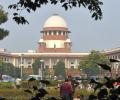
The Supreme Court on Monday said the pleas challenging the Waqf (Amendment) Act's constitutional validity will now be taken up by a bench headed by Chief Justice of India-designate Justice B R Gavai on May 15 as the incumbent CJI will be demitting office on May 13.
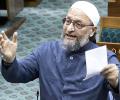
The Supreme Court on Thursday agreed to consider a plea of All India Majlis-e-Ittehadul Muslimeen (AIMIM) chief Asaduddin Owaisi seeking the implementation of the 1991 places of worship law, which asks to maintain the religious character of a place as it existed on August 15, 1947.

A three-member panel led by the Chief Justice of India (CJI) Sanjiv Khanna has been formed to probe the discovery of "four to five semi-burnt sacks" of Indian currency notes found after a fire at the residence of Delhi High Court judge Yashwant Varma. The incident, which occurred on March 14, has triggered an in-house inquiry, with the findings determining the judge's fate. The panel, consisting of Chief Justices Sheel Nagu (Punjab and Haryana), G S Sandhawalia (Himachal Pradesh), and Karnataka High Court judge Anu Sivaraman, will conduct a "deeper probe" into the allegations. Justice Varma has denied any knowledge of the cash being stored in the storeroom. The inquiry follows the Delhi High Court Chief Justice Devendra Kumar Upadhyaya's report that recommended a deeper investigation. The top court's 2014 guidelines for in-house procedures for probing allegations against judges will be followed during the inquiry. The panel's findings could lead to either the removal of the judge, if the misconduct is deemed serious, or a reprimand. The inquiry will also determine if the fire was indeed a short-circuit as initially reported.

A three-judge Supreme Court bench will hear petitions challenging the constitutional validity of the Waqf (Amendment) Act, 2025, on April 16. The petitions, including those by politicians and the All India Muslim Personal Law Board (AIMPLB) and Jamiat Ulama-i-Hind, were filed in the top court challenging the validity of the newly-enacted law. The Centre has filed a caveat in the apex court, seeking a hearing before any order is passed.

"Liberty is granted to newly-added respondents (states) to file a response within 15 days from the date of service, and rejoinder if any be filed after 15 days. The interim order to continue and will equally apply to the cases mentioned in the amended writ petition. We direct no further cases be registered without the permission of this court," the bench's order said.
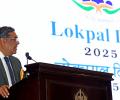
The Supreme Court of India will examine the jurisdiction of the Lokpal, India's anti-corruption ombudsman, in entertaining complaints against sitting high court judges. The court is considering a suo motu proceeding initiated over the Lokpal's January 27 order on the issue. The case involves two complaints filed against a sitting additional judge of a high court, alleging that he influenced a judge of the subordinate judiciary and a judge of the same high court set to deal with a suit filed against the complainant by a private company.

The Supreme Court has adjourned pleas challenging the appointments of the chief election commissioner (CEC) and election commissioners (ECs) under the 2023 law. The court indicated the matter would be listed after the Holi festival break due to a paucity of time. Petitioners, including the NGO Association for Democratic Reforms, argued for an urgent hearing, emphasizing the importance of the issue and the potential impact on democratic processes. The appointment of the new CEC and ECs under the 2023 law, which excludes the Chief Justice of India from the selection panel, has been a point of contention, with petitioners alleging it undermines the independence of the election commission.
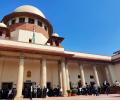
The Supreme Court on Monday agreed to consider listing for urgent hearing the petitions challenging the constitutional validity of the Waqf (Amendment) Act, 2025.

The Department for Promotion of Industry and Internal Trade (DPIIT), under the Ministry of Commerce and Industry, has entered into a partnership with the Startup Policy Forum (SPF), a premier industry organisation representing India's leading new-age companies.

The Supreme Court has agreed to examine a PIL alleging that Arunachal Pradesh Chief Minister Pema Khandu awarded government contracts to his family members. The court has asked the state government to provide details of the beneficiaries and inform if due process was followed. The bench also sought responses from union ministries of home affairs, finance and the Comptroller and Auditor General of India on the issue within five weeks.

The Centre on Thursday assured the Supreme Court that it will neither denotify Waqf properties, including "Waqf by user", nor make any appointments to the central Waqf council and boards till May 5.
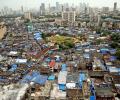
The Supreme Court of India has refused to halt the redevelopment project of Dharavi in Mumbai, allowing the Adani Group to proceed with their project. The court rejected a plea from Seclink Technologies Corporation, the original highest bidder for the project in 2018, which challenged the tender process and the award to Adani Properties Pvt Ltd in 2022. The court directed Adani Properties to make payments through a single bank account and ordered Seclink Technologies to file an affidavit detailing their increased offer for the project. The project work has already commenced, with constructions underway and 2,000 people employed on the site.
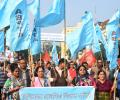
The Supreme Court of India has invalidated the appointment of 25,753 teachers and other staff in West Bengal's state-run and state-aided schools, deeming the selection process "vitiated and tainted." The court ordered the state government to conduct a fresh selection process within three months. The decision comes after a Calcutta High Court verdict in April 2024, which also annulled the appointments. The apex court, while upholding the high court's order, made some modifications, including exempting disabled employees from returning their salaries. The case stemmed from alleged irregularities in the 2016 recruitment process by the West Bengal School Service Commission (SSC), involving OMR sheet tampering and rank-jumping. The Supreme Court had previously termed it a "systemic fraud." Former West Bengal education minister Partha Chatterjee and Trinamool Congress MLAs Manik Bhattacharya and Jiban Krishna Saha are among the accused being investigated in the recruitment scam.
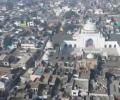
A court in Budaun will decide on December 24 whether to proceed with a hearing in the Jama Masjid Shamsi versus Neelkanth temple case. The dispute arose in 2022 when a Hindu group claimed the temple existed at the mosque site and sought permission to worship. The Supreme Court recently restrained all courts from entertaining and passing any orders on lawsuits seeking surveys of religious places under the Places of Worship (Special Provisions) Act, 1991. The Muslim side argues that the lower court should not proceed with the hearing as it cannot pass any orders, while the Hindu side maintains the Supreme Court order does not stop the hearing. The court will now decide whether to continue the proceedings.
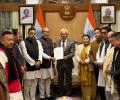
Amidst rumblings within the state Bharatiya Janata Party seeking a change of leadership in strife-torn Manipur, Chief Minister N Biren Singh on Sunday tendered his resignation to Governor Ajay Kumar Bhalla at the Raj Bhavan in Imphal.

The Supreme Court of India began hearing a batch of petitions challenging the constitutional validity of the Waqf (Amendment) Act, 2025. The bench, led by Chief Justice Sanjiv Khanna, asked both sides to address whether the court should entertain the petitions or relegate them to the high court. The hearing is underway with senior advocate Kapil Sibal arguing for the petitioners. The act, which was passed by Parliament following heated debates, has been challenged by various parties including AIMIM leader Asaduddin Owaisi, All India Muslim Personal Law Board (AIMPLB), and Jamiat Ulama-i-Hind.
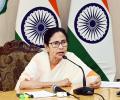
West Bengal Chief Minister Mamata Banerjee has defended her support for teachers who were dismissed following a Supreme Court verdict, accusing the BJP and CPI(M) of "hatching a conspiracy" to influence the ruling. She dared the BJP to arrest her for supporting the affected candidates, while asserting that her government will abide by the verdict but explore all legal options. The development has triggered political reactions with the BJP demanding Banerjee's resignation, while the CPI(M) expressed concern over the impact on the education system. Banerjee also criticized the BJP's handling of the Vyapam scam in Madhya Pradesh, drawing parallels to the school jobs scam in West Bengal.

The Act prohibits conversion of any place of worship and provides for the maintenance of the religious character of any place of worship as it existed on August 15, 1947.

The Supreme Court declined to hear a public interest litigation (PIL) seeking directions to the Election Commission and state election bodies to address purported duplication and multiple entries in voter lists. The court suggested the petitioner approach high courts with specific grievances and file representations with appropriate authorities.
A video and inquiry report have raised questions about the Delhi Fire Services' claim that no cash was found at the official residence of Delhi High Court judge Justice Yashwant Varma during a fire incident on March 14. The video, which has gone viral on social media, shows fire fighters dousing flames on articles that appear to include half-burnt Indian currency notes. The Delhi High Court Chief Justice has initiated an in-house inquiry against Justice Varma and the Supreme Court has proposed his transfer to the Allahabad High Court.
Justice Shekhar Kumar Yadav, an Allahabad High Court judge, is set to appear before the Supreme Court Collegium to explain his controversial statements made at a Vishva Hindu Parishad (VHP) function. The Supreme Court has sought a report from the Allahabad High Court after news reports surfaced regarding Justice Yadav's remarks, which were widely condemned as "hate speech". The judge's statements, made at a VHP event, sparked outrage from various quarters, including opposition leaders and lawyers. The Bar Association of India has also condemned the judge's remarks and called for an apology.
The Mathura Shahi Masjid Eidgah Committee has approached the Supreme Court, requesting the court to prevent the central government from filing a response to a petition challenging the Places of Worship Act's constitutional validity. The committee accuses the BJP-led government of intentionally delaying its response. The court had previously issued a notice to the government in March 2021, but the government has yet to submit its reply despite numerous opportunities. The committee argues that the government's delay is intended to obstruct those opposing the challenge to the Places of Worship Act from filing their own responses. The petition also states that the pleas challenging the law's validity are scheduled for hearing on February 17, and closing the government's right to respond would serve justice. The Supreme Court previously issued a ruling in December 2022 that stopped courts from entertaining new lawsuits or issuing interim or final orders regarding the reclaiming of religious places, particularly mosques and dargahs. The ruling halted proceedings in 18 lawsuits filed by Hindu groups seeking surveys to confirm the original religious character of 10 mosques, including the Gyanvapi Masjid in Varanasi, the Shahi Idgah Masjid in Mathura, and the Shahi Jama Masjid in Sambhal. This decision was made in response to six petitions, including one filed by lawyer Ashwini Upadhyay, challenging various provisions of the Places of Worship Act. The 1991 law prohibits the conversion of places of worship and guarantees the preservation of their existing religious character as it stood on August 15, 1947. Notably, the dispute regarding the Ram Janmabhoomi-Babri Masjid in Ayodhya was excluded from this law. There are also several cross-petitions advocating for a strict enforcement of the 1991 law to uphold communal harmony and maintain the current status of mosques that Hindu groups seek to reclaim, claiming they were temples before being destroyed by invaders.

Chief Justice of India Sanjiv Khanna has recused himself from hearing pleas related to the alleged illegal felling of hundreds of trees in the Delhi Ridge area. The decision comes after a previous bench, led by former CJI D Y Chandrachud, sought a personal affidavit from Delhi Lieutenant Governor V K Saxena in the case, which also sought contempt proceedings against certain DDA officials. CJI Khanna stated that his prior involvement with the Delhi LG while serving as the NALSA chairman would make it inappropriate for him to hear the plea. The bench has ordered the listing of the pleas before a different bench starting November 27.
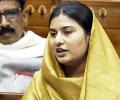
Samajwadi Party leader and Kairana MP Iqra Choudhary has moved the Supreme Court seeking effective implementation of the Places of Worship (Special Provisions) Act, 1991. This move comes amidst several petitions challenging the law's validity, including those filed by the Akhil Bhartiya Sant Samiti and lawyer Ashwini Upadhyay. The Supreme Court, in December 2022, had restrained all courts from examining fresh suits and passing interim orders in pending cases seeking to reclaim religious places. The Act aims to maintain the religious character of places of worship as they existed on August 15, 1947, but the dispute relating to Ram Janmabhoomi-Babri Masjid at Ayodhya was kept out of its purview. The court has listed Choudhary's plea with other pending pleas for February 17.

The Supreme Court of India has ruled that the secular nature of the state does not prevent it from interfering with religious practices and attitudes when they impede development and the right to equality in the larger public interest. The court dismissed pleas challenging the 1976 amendment to the Constitution, which added the terms "socialist", "secular", and "integrity" to the Preamble, stating that Parliament's amending power extends to the Preamble as well.
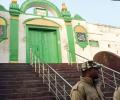
The Uttar Pradesh government has informed the Supreme Court that the disputed "private well" near the Mughal-era Jama Masjid mosque in Sambhal was situated on public land. The state government said the petitioner failed to disclose there was a well within the boundary walls of the mosque known locally as "yagna koop". The committee, in a spot inspection, found that the well was situated outside the mosque boundary wall, the report said. The report said the state was committed to ensuring peace and harmony in the region and any restraint on the use of such public wells by the community at large may not help in achieving that goal.
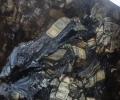
The Chief Justice of India (CJI) Sanjiv Khanna has ordered an in-house inquiry into allegations against a Delhi High Court judge, Justice Yashwant Varma, after reports of burnt cash being found at his residence. The inquiry will be conducted by a three-member committee headed by Justice Sheel Nagu, Chief Justice of the Punjab and Haryana High Court. The allegations stem from a report by the Delhi High Court Chief Justice Devendra Kumar Upadhyaya, who stated that four to five semi-burnt sacks of Indian currency notes were found at Justice Varma's residence following a fire. Justice Varma has strongly denied the allegations, calling them a conspiracy to frame him.
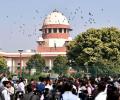
A bench comprising Chief Justice Sanjiv Khanna and Justice Sanjay Kumar also indicated that it may not take up the pending scheduled petitions, heard earlier by a three-judge bench, during the day as it was sitting in a combination of two judges.

The Supreme Court of India has extended its stay on a court-monitored survey of the Shahi Idgah Mosque complex in Mathura, which is located adjacent to the Krishna Janmabhoomi temple. The court deferred the hearing on a plea against the survey to April 1, while the interim order staying the survey will continue to operate. The Hindu side claims that the mosque complex holds signs of a temple that once existed at the site, while the Muslim side contends that the lawsuits filed by the Hindu litigants violate the Places of Worship (Special Provisions) Act of 1991.

Terming as 'unfortunate' the January 29 stampede at Maha Kumbh where at least 30 people were killed, the Supreme Court on Monday refused to hear a public interest litigation (PIL) for guidelines over safety of devotees and asked the petitioner to move the Allahabad high court instead.
The Supreme Court of India has sought the Indian government's response to a petition filed by a Muslim woman seeking to be governed by the Indian succession law instead of Shariat. The woman, Safiya P.M., argues that she does not believe in Shariat and wants to be governed by secular law, including the Indian Succession Act of 1925. The court has asked the government to file a counter affidavit within four weeks.

The Supreme Court has sought details from the Allahabad High Court regarding controversial statements made by Justice Shekhar Kumar Yadav at a VHP function. The development comes amid calls for action against the judge for his remarks, which have been labeled as hate speech by some. The judge's statements were made at a VHP function on December 8, where he spoke about the Uniform Civil Code and the law working according to the majority. Several individuals and organizations, including lawyer Prashant Bhushan and CPI(M) leader Brinda Karat, have called for an inquiry into the judge's conduct and for his removal from judicial duties.

The Supreme Court on Friday said the plea seeking a policy for verification of electronic voting machines should go before the same bench that delivered a verdict in April rejecting the demand for bringing back the old paper ballots.
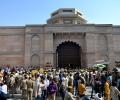
The Supreme Court of India is scheduled to hear a batch of petitions challenging the validity of certain provisions of the Places of Worship (Special Provisions) Act, 1991, which prohibits lawsuits to reclaim a place of worship or change its character from what prevailed on August 15, 1947. The pleas, including one filed by Ashwini Upadhyay, argue that these provisions violate the right to judicial remedy and create an arbitrary cut-off date. The matter will be heard in the backdrop of several ongoing cases related to places of worship, including the Gyanvapi Mosque in Varanasi and the Shahi Idgah Mosque in Mathura. The Muslim side has cited the 1991 law to argue that such suits are not maintainable. The Supreme Court had previously sought the Centre's response to Upadhyay's petition, which alleged that the law creates an "arbitrary and irrational retrospective cut-off date" for maintaining the character of places of worship.
The Supreme Court of India will hear a plea from the mosque management committee challenging an order rejecting its petition in the Krishna Janmabhoomi-Shahi Idgah dispute in Mathura, Uttar Pradesh on January 15. The Allahabad High Court had rejected the mosque committee's plea, stating that the religious character of the Shahi Idgah mosque needed to be determined. The case involves claims that the mosque was built after the demolition of a temple, a claim disputed by the mosque committee. The Supreme Court will now decide on the maintainability of the mosque committee's plea.

Delhi recorded a voter turnout of over 19 per cent in the first four hours of polling on Wednesday across 70 assembly constituencies, with the highest voter participation witnessed in North East district.
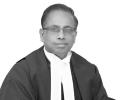
Justice Vishwanathan said he was in "the Common Cause (the NGO which had filed the PIL in coal scam cases). This case was of the ED (Enforcement Directorate), but still...".

The Indian government has refused to accept recommendations for a 10% pension increase for retired regular Army captains under the One Rank One Pension (OROP) scheme. The Supreme Court heard an appeal by the government challenging an Armed Forces Tribunal order that mandated a decision on pension for retired captains. The government's decision not to accept the recommendations has led to a delay in resolving pension anomalies for these officers. The case will be heard again on December 12, 2023.

The Supreme Court of India has ordered a status quo on a private well located near the entrance of the Sambhal Jama Masjid, prohibiting any action regarding the well without its permission. The order came in response to a plea by the mosque's management committee, which challenged a lower court order that allowed a survey of the mosque, citing concerns over violence and loss of life during previous surveys. The court also instructed the authorities to file a status report within two weeks.

Much of the discussion is happening at a "family level, not a corporate level". That means it is an Ambani or a Goenka in direct talks with Johar.
